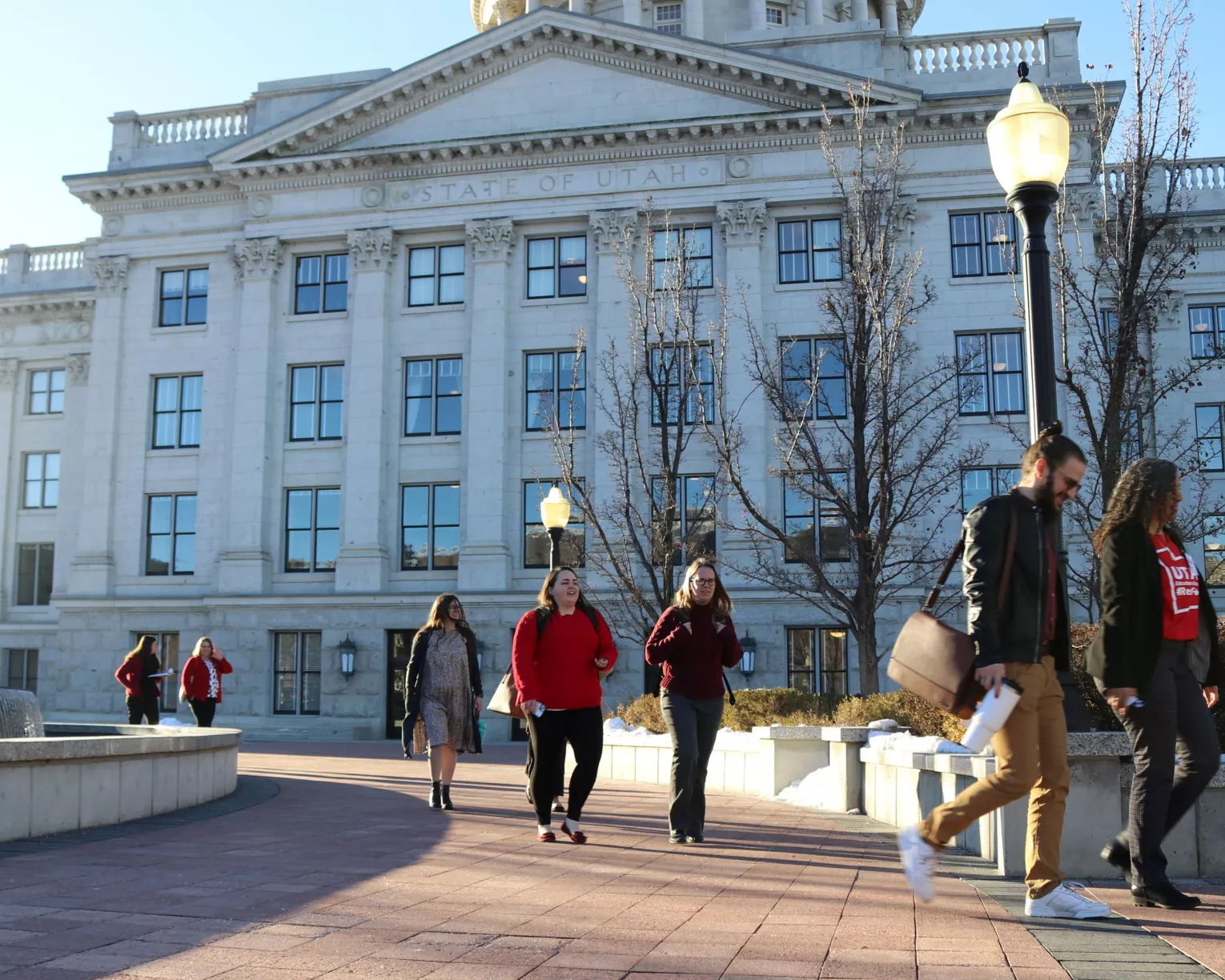
Attending UEA Under the Dome reinforced something I believe deeply: Teachers are not just implementers of policy. We are knowledgeable professionals and a line of defense for our students, democracy and the rule of law.
In our classrooms, we teach how government functions, why institutions matter and how to recognize conflicts of interest and political corruption. That responsibility does not end at the classroom door.
As public servants, educators carry moral authority.
When policies threaten student well-being, weaken public institutions or reflect harmful conflicts of interest, we have an obligation to speak clearly and responsibly.
The legislative process moves quickly. Not every lawmaker listens. But some do, and members of the public do as well. When teachers explain real classroom impact, it grounds debate in lived experience rather than rhetoric.
Protecting children means protecting honest governance, transparent decision-making and equitable public education. Democracy is strengthened when professionals participate rather than withdraw.
If we expect our students to understand civic responsibility, we must model it. Engagement is not about partisanship. It is about the stewardship of the institutions our students will inherit.